
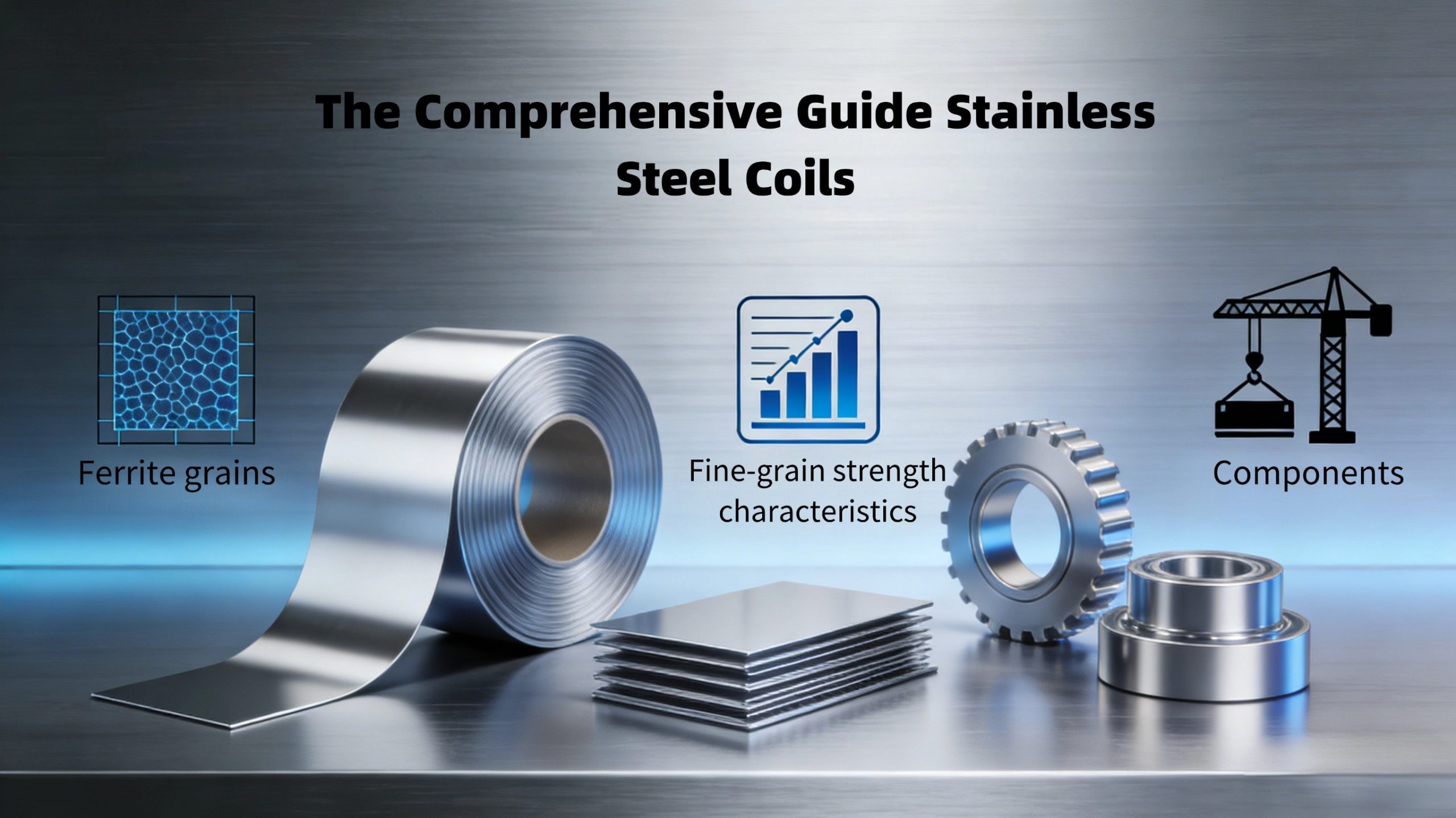
Stainless steel coils have become an indispensable material in modern industry and manufacturing, owing to their remarkable strength, corrosion resistance, and versatility. From construction and automotive to appliances and medical devices, stainless steel coils serve a broad range of applications, making them a vital component in today’s technological landscape.
This comprehensive guide aims to delve into the multifaceted world of stainless steel coils, exploring their types, properties, manufacturing processes, applications, and future trends. Whether you’re a seasoned engineer, a procurement manager, or an enthusiast seeking in-depth knowledge, this document will serve as an authoritative resource.
1. Introduction to Stainless Steel Coils
Stainless steel coils are rolled sheets of stainless steel that are wound into coils for easier handling, transportation, and processing. These coils are produced in various widths, thicknesses, and grades, tailored to meet specific application requirements.
What is Stainless Steel?
Stainless steel is an alloy primarily composed of iron, with a minimum of 10.5% chromium content. The chromium forms a passive oxide layer on the surface, providing corrosion resistance. Additional elements like nickel, molybdenum, and manganese enhance specific properties such as ductility, strength, and corrosion resistance.
Benefits of Using Stainless Steel Coils
- Corrosion Resistance: Suitable for harsh environments.
- Strength and Durability: Withstanding mechanical stresses.
- Aesthetic Appeal: Attractive surface finish.
- Recyclability: Environmentally friendly and sustainable.
2. Types of Stainless Steel Coils
Stainless steel coils are classified based on their microstructure and chemical composition. The main categories include:
2.1 Austenitic Stainless Steel Coils
| Feature | Description |
|---|---|
| Composition | High chromium and nickel content |
| Properties | Non-magnetic, excellent corrosion resistance, high ductility |
| Common Grades | 304, 316, 321 |
2.2 Ferritic Stainless Steel Coils
| Feature | Description |
|---|---|
| Composition | Chromium-rich, low nickel |
| Properties | Magnetic, good corrosion resistance, moderate ductility |
| Common Grades | 430, 446 |
2.3 Martensitic Stainless Steel Coils
| Feature | Description |
|---|---|
| Composition | Chromium and carbon-rich |
| Properties | Magnetic, high strength, moderate corrosion resistance |
| Common Grades | 410, 420, 440C |
2.4 Duplex Stainless Steel Coils
| Feature | Description |
|---|---|
| Composition | Balanced chromium, nickel, and molybdenum |
| Properties | Combines strength of ferritic and austenitic steels, excellent corrosion resistance |
| Common Grades | 2205, 2507 |
3. Mechanical and Chemical Properties
Understanding the properties of stainless steel coils is essential for selecting the right material for specific applications.
3.1 Mechanical Properties
| Property | Austenitic | Ferritic | Martensitic | Duplex |
|---|---|---|---|---|
| Tensile Strength (MPa) | 485–750 | 415–620 | 515–690 | 620–950 |
| Yield Strength (MPa) | 170–330 | 275–415 | 275–690 | 450–780 |
| Ductility (%) | 40–50 | 25–40 | 20–30 | 25–35 |
3.2 Chemical Properties
| Element | Austenitic | Ferritic | Martensitic | Duplex |
|---|---|---|---|---|
| Chromium (%) | 16–26 | 11–30 | 12–18 | 22–25 |
| Nickel (%) | 8–22 | 0–5 | 0–1 | 5–7 |
| Molybdenum (%) | 0–3 | 0 | 0 | 0–4 |
4. Manufacturing Processes of Stainless Steel Coils
The production of stainless steel coils involves several stages to ensure quality, precision, and performance.
4.1 Melting and Casting
- Electric Arc Furnace (EAF): Melts scrap and raw materials.
- Vacuum Induction Melting (VIM): Produces high-purity steel.
4.2 Hot Rolling
- Reduces the ingots to slabs at high temperatures.
- Enhances ductility and prepares the material for cold rolling.
4.3 Cold Rolling
- Further reduces thickness to desired dimensions.
- Improves surface finish and mechanical properties.
4.4 Annealing and Passivation
- Heat treatment to relieve internal stresses.
- Passivation forms a protective oxide layer, enhancing corrosion resistance.
4.5 Coiling and Finishing
- The steel sheets are coiled for ease of handling.
- Surface treatments like polishing, brushing, or coating are applied as needed.
5. Surface Finishes and Coatings
The appearance and performance of stainless steel coils can be customized through various surface finishes and coatings.
| Finish Type | Description | Typical Use |
|---|---|---|
| No. 1 (Hot-rolled) | Rough, dull surface | Structural applications |
| No. 2B | Smooth, matte finish | General-purpose, decorative |
| No. 4 | Brushed finish | Architectural, appliances |
| No. 8 (Mirror) | Highly reflective | Decorative, jewelry |
Coatings:
- Paints and Lacquers: For aesthetic and protective purposes.
- PVD Coatings: For enhanced wear resistance.
- Electropolishing: Improves corrosion resistance and surface smoothness.
6. Applications of Stainless Steel Coils
Stainless steel coils are utilized across various industries due to their unique properties.
6.1 Construction and Architecture
- Cladding and roofing
- Handrails and fixtures
- Elevator panels
6.2 Automotive Industry
- Exhaust systems
- Structural components
- Fuel tanks
6.3 Food and Beverage Industry
- Food processing equipment
- Storage tanks
- Kitchen appliances
6.4 Medical Devices
- Surgical instruments
- Dental tools
- Hospital furniture
6.5 Packaging and Consumer Goods
- Cans and containers
- Appliances
- Cutlery
7. Advantages and Disadvantages
7.1 Advantages
| Advantage | Description |
|---|---|
| Corrosion Resistance | Suitable for harsh environments |
| Strength | High tensile strength for structural applications |
| Aesthetic Appeal | Attractive finishes for design purposes |
| Recyclability | Environmentally sustainable material |
| Low Maintenance | Less prone to corrosion and staining |
7.2 Disadvantages
| Disadvantage | Explanation |
|---|---|
| Cost | Generally higher than carbon steels |
| Workability | May require specialized equipment for fabrication |
| Susceptibility to Cracking | During welding if not properly managed |
8. Quality Standards and Certification
Ensuring the quality of stainless steel coils involves adherence to international standards.
| Standard | Description |
|---|---|
| ASTM A240 | Specification for chromium and chromium-nickel stainless steel plate, sheet, and strip for pressure vessels and general applications |
| EN 10088 | European standards for stainless steels |
| JIS G 4305 | Japanese Industrial Standards for stainless steel plates and sheets |
Certifications such as ISO 9001, ISO 14001, and OHSAS 18001 further guarantee product quality and safety.


9. Selecting the Right Stainless Steel Coil
Choosing the appropriate stainless steel coil depends on factors like:
- Application Environment: Corrosive, high-temperature, or structural use.
- Mechanical Requirements: Strength, ductility, formability.
- Surface Finish: Decorative, functional.
- Cost Constraints: Budget considerations.
Decision-Making Chart
| Application | Recommended Grade | Surface Finish | Additional Notes |
|---|---|---|---|
| Food processing | 304 | No. 2B or No. 4 | Must meet food safety standards |
| Marine environment | 316 | No. 2B or No. 4 | Molybdenum enhances corrosion resistance |
| Structural | 430 or 304 | No. 1 or No. 2B | Depends on environmental exposure |
10. Future Trends and Innovations
The stainless steel industry continues to evolve with innovations aimed at enhancing performance and sustainability.
10.1 Advanced Alloys
Development of new grades with superior corrosion resistance, strength, or specialized properties for niche applications.
10.2 Sustainable Manufacturing
Focus on reducing energy consumption, recycling, and eco-friendly processes.
10.3 Surface Engineering
Nano-coatings and surface treatments to improve wear resistance, antibacterial properties, and aesthetic qualities.
10.4 Digitalization and Automation
Implementation of smart manufacturing techniques, including IoT integration and automated quality control.
11. Conclusion
Stainless steel coils embody a remarkable combination of strength, corrosion resistance, and versatility, making them indispensable across diverse sectors. Understanding their types, properties, manufacturing processes, and applications enables informed decision-making for engineers, designers, and procurement specialists.
As technological advancements and sustainability become increasingly vital, the future of stainless steel coils looks promising, with innovations poised to further expand their capabilities and applications.
12. References
- ASTM International. (2023). ASTM A240 / A240M – Standard Specification for Chromium and Chromium-Nickel Stainless Steel Plate, Sheet, and Strip for Pressure Vessels and General Applications.
- European Committee for Standardization. (2023). EN 10088 – Stainless Steels.
- Japanese Industrial Standards. (2023). JIS G 4305 – Stainless Steel Plates and Sheets.
- World Steel Association. (2023). Steel Industry Sustainability and Innovation.
- “Stainless Steel: An Overview,” Materials Science Journal, 2023.
This guide aims to serve as a complete resource for understanding the multifaceted world of stainless steel coils, empowering stakeholders to leverage their full potential in various applications.
PDF Download:Download

Get Your Next Project Done!
China Steel Supplier & Manufacturer
THE LARGEST METALS MANUFACTURING
GengFei Steel is a professional “Steel Supplier” located in China, we provide supply service of stainless steel, carbon steel, aluminum and other metal materials.
As an industry-leading company, we are committed to providing our customers with the highest quality raw materials backed by first-class customer service and support. Our wide range of supply includes all kinds of stainless steel plate, tube, wire rod and carbon steel plate, tube, bar and so on. Our team of experienced professionals can help you choose the material that best suits your project needs and ensure your order is delivered on time. Our clients range from small businesses to large manufacturers, and we can provide professional service and support no matter the size of your needs.