
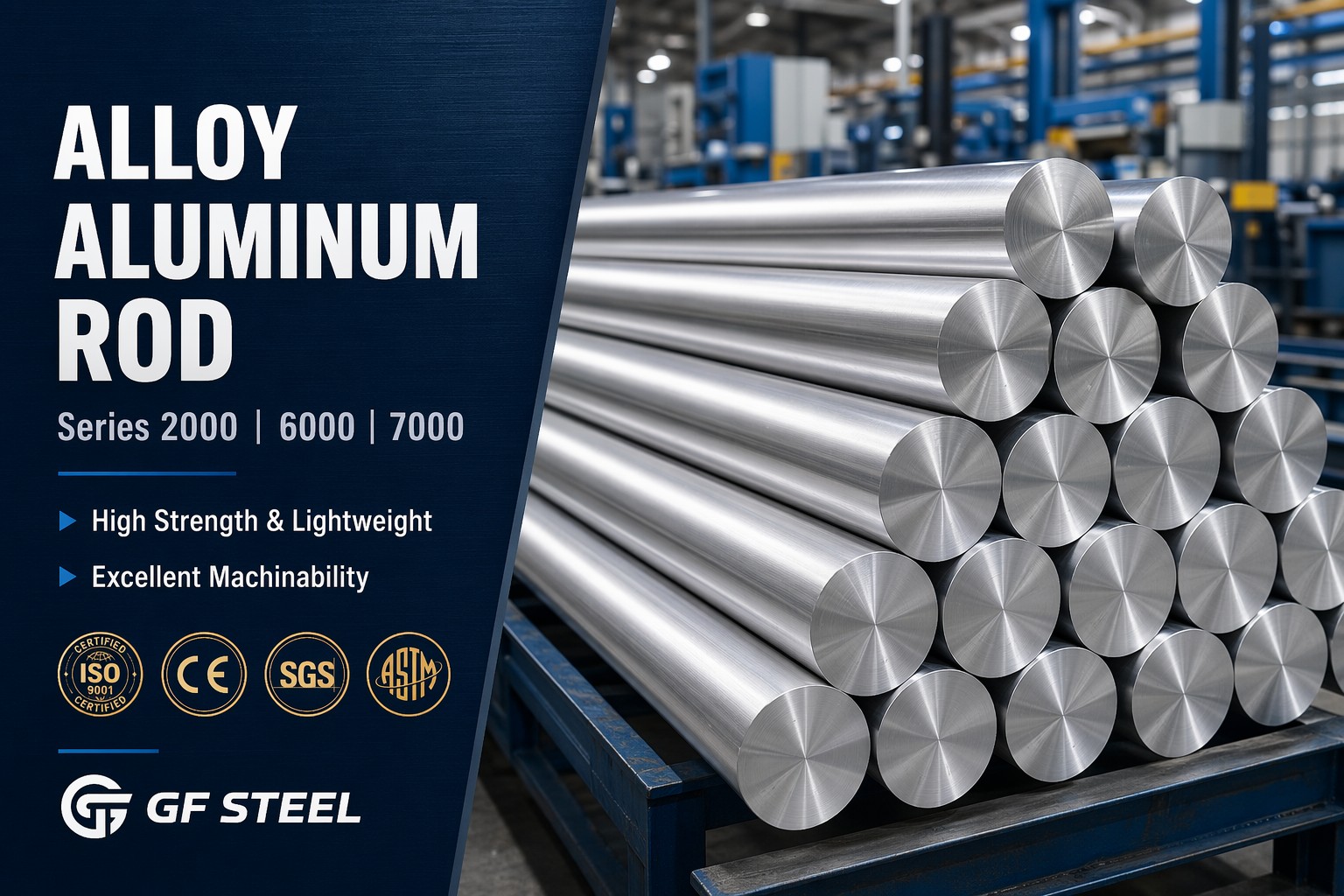
Introduction: The Evolution of Lightweight High-Strength Materials
In the modern landscape of aerospace, automotive, and precision engineering, the alloy aluminum rod has emerged as a cornerstone material. By combining the inherent low density of aluminum with specific alloying elements such as Magnesium, Silicon, Copper, and Zinc, metallurgists have created a suite of products that offer the structural integrity of steel at a fraction of the weight.
At GF Steel, we supply precision-engineered alloy aluminum rods in a wide range of diameters and specifications. This technical guide examines the metallurgical classifications, mechanical performance, and international standards that define high-quality aluminum alloy bars.
Classification by Alloy Series
Aluminum alloys are categorized into “series” based on their primary alloying elements. For rod and bar production, the 2000, 6000, and 7000 series are the most critical for industrial B2B applications.
1. 2000 Series (Al-Cu Alloys)
Alloyed primarily with Copper, these rods are known for their exceptional strength and high-speed machinability.
- Grade 2024: Known as the “aircraft alloy,” it offers high fatigue resistance and high yield strength.
2. 6000 Series (Al-Mg-Si Alloys)
The most versatile series for general engineering. These alloys are heat-treatable and offer excellent corrosion resistance.
- Grade 6061-T6: The industry standard for structural components, offering the best balance of strength, weldability, and price.
2.3 7000 Series (Al-Zn Alloys)
The highest strength aluminum alloys currently available. These rods are specified for high-stress structural parts.
- Grade 7075-T6: Often used in military and high-performance racing applications due to its superior tensile properties.
Mechanical and Physical Performance Data
For engineering design, understanding the mechanical limits of the alloy is paramount. Below are the typical minimum values for the most specified B2B grades.
Table 1: Comparative Mechanical Properties (Typical T6 Temper)
| Grade | Tensile Strength (MPa) | Yield Strength (MPa) | Elongation (%) | Brinell Hardness (HB) |
|---|---|---|---|---|
| 6061-T6 | 310 | 276 | 12 – 17 | 95 |
| 2024-T4 | 470 | 325 | 20 | 120 |
| 7075-T6 | 570 | 505 | 11 | 150 |
Manufacturing Standards and Quality Assurance
GF Steel ensures that every alloy aluminum rod complies with globally recognized regulatory frameworks to ensure safety and interoperability.
- ASTM B211: Standard Specification for Aluminum and Aluminum-Alloy Rolled or Cold Finished Bar, Rod, and Wire.
- EN 573 / EN 755: European standards for chemical composition and mechanical properties of extruded products.
- AMS (Aerospace Material Specifications): Strict controls for aerospace-grade 2024 and 7075 rods.
Quality Control Protocols at GF Steel:
- Positive Material Identification (PMI): Spectroscopic element verification for every batch.
- Ultrasonic Testing (UT): Non-destructive testing to detect internal inclusions or voids in large-diameter rods.
- Dimensional Tolerance Control: Precision measurement of straightness, ovality, and diameter.
Key Engineering Advantages
1. Superior Strength-to-Weight Ratio
Alloy aluminum rods provide approximately the same strength as many low-carbon steels while being 60% lighter. This reduction in mass is critical for reducing energy consumption in transport and increasing the speed of reciprocating machinery.
2. Excellent Machinability
Most aluminum alloys, particularly 2011 and 2024, are “free-machining.” This allows for higher spindle speeds and cleaner surface finishes, reducing production time for high-volume fastener and fitting manufacturing.
3. Surface Finishing Capabilities
Alloy aluminum rods respond exceptionally well to secondary finishes such as Anodizing (Clear, Color, or Hard Coat), chemical conversion coatings, and powder spraying, providing both aesthetic appeal and enhanced environmental protection.
Major Global Industry Applications
- Aerospace & Defense: Structural airframe components, wing spars, and fuse mechanisms.
- Automotive Engineering: Steering linkages, transmission valves, and engine mounting brackets.
- Maritime Industry: Mast fittings, deck hardware, and hydraulic components (using 6061/5083 alloys).
- Oil & Gas: High-pressure fittings and specialized valves requiring corrosion resistance.
- Precision Machining: CNC-machined parts, fasteners, screws, and electronic housings.
Contact GF Steel: Your Global Aluminum & Steel Partner
GF Steel is a leading manufacturer and exporter of high-performance alloy aluminum products. Our metallurgical support team is available to assist you with material selection, technical datasheets, and global logistics coordination.
- Company Name: GF Steel
- Technical Sales Email: [email protected]
- WhatsApp / Mobile: +86 191 3816 4778
Precision Metallurgy. Lightweight Strength Redefined. Certified Quality. Global Supply Reliability.

Get Your Next Project Done!
China Steel Supplier & Manufacturer
THE LARGEST METALS MANUFACTURING
GengFei Steel is a professional “Steel Supplier” located in China, we provide supply service of stainless steel, carbon steel, aluminum and other metal materials.
As an industry-leading company, we are committed to providing our customers with the highest quality raw materials backed by first-class customer service and support. Our wide range of supply includes all kinds of stainless steel plate, tube, wire rod and carbon steel plate, tube, bar and so on. Our team of experienced professionals can help you choose the material that best suits your project needs and ensure your order is delivered on time. Our clients range from small businesses to large manufacturers, and we can provide professional service and support no matter the size of your needs.