

Stainless steel has become an indispensable material in numerous industries due to its exceptional properties, including corrosion resistance, strength, and versatility. Among the various grades, 316L stainless steel bars stand out for their enhanced corrosion resistance, weldability, and durability. This article explores the comprehensive aspects of 316L stainless steel bars, highlighting their properties, applications, manufacturing processes, and advantages that make them a preferred choice across diverse sectors.
Introduction to 316L Stainless Steel Bars
316L stainless steel bars are a low-carbon variant of 316 stainless steel, classified as part of the austenitic stainless steel family. The ‘L’ in 316L signifies ‘low carbon,’ which imparts superior corrosion resistance, especially in weld-affected zones. These bars are manufactured through various processes to meet the specific needs of industries that demand high performance, durability, and corrosion resistance.
Composition and Properties of 316L Stainless Steel Bars
Chemical Composition
The chemical makeup of 316L stainless steel bars is carefully balanced to optimize their properties. The typical composition is as follows:
| Element | Composition (%) | Functionality |
|---|---|---|
| Iron (Fe) | Balance | Base metal provides strength |
| Chromium (Cr) | 16.0 – 18.0 | Enhances corrosion resistance, forms a passive oxide layer |
| Nickel (Ni) | 10.0 – 14.0 | Improves corrosion resistance and toughness |
| Molybdenum (Mo) | 2.0 – 3.0 | Increases pitting and crevice corrosion resistance |
| Manganese (Mn) | Up to 2.0 | Stabilizes austenitic structure, improves hot working |
| Silicon (Si) | Up to 0.75 | Enhances oxidation resistance |
| Carbon (C) | Up to 0.03 | Limits carbide precipitation, improves weldability |
Mechanical Properties
| Property | Typical Value |
|---|---|
| Tensile Strength | 70,000 – 80,000 psi (485 – 552 MPa) |
| Yield Strength | 30,000 psi (207 MPa) |
| Elongation at Break | 40-50% |
| Hardness (Brinell) | 156 HB |
Corrosion Resistance
Thanks to its alloying elements, 316L stainless steel bars exhibit excellent resistance to:
- Chloride-induced pitting and crevice corrosion
- General corrosion in marine environments
- Acidic and alkaline environments
Additional Properties
- Weldability: Exceptional, especially due to low carbon content
- Formability: Good, suitable for bending, shaping, and machining
- Temperature Resistance: Maintains strength at high temperatures, up to 870°C (1600°F)
Manufacturing Processes for 316L Stainless Steel Bars
The production of 316L bars involves several stages, each crucial to ensuring quality and performance.
1. Melting and Casting
The raw materials are melted in electric arc furnaces or vacuum induction melting (VIM) furnaces to produce high-purity ingots.
2. Hot Working
The ingots are hot-rolled or forged into billets, which are then further processed into bars through hot or cold working techniques.
3. Annealing
Post-deformation annealing relieves internal stresses and enhances ductility.
4. Cold Drawing and Finishing
For precision bars, cold drawing enhances dimensional accuracy and surface finish.
5. Surface Treatment
Processes such as polishing, passivation, or coating may be applied to improve corrosion resistance and aesthetic appeal.
Types of 316L Stainless Steel Bars
316L stainless steel bars are available in various forms suited for different applications:
| Type | Description | Typical Uses |
|---|---|---|
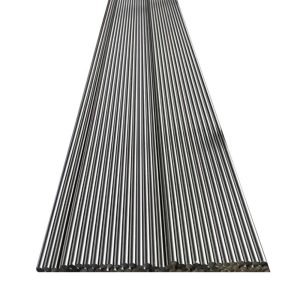
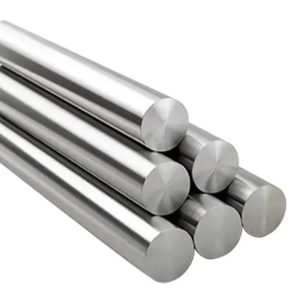
| Round Bars | Cylindrical, common for machining and fabrication | Shafts, fasteners, structural components |
| Square Bars | Equal sides, good for structural and decorative purposes | Frames, supports, architectural elements |
| Rectangular Bars | Flat, elongated, used in frames and reinforcements | Structural supports, machinery parts |
| Hexagonal Bars | Six-sided, suitable for wrenching and threading | Nuts, bolts, fittings |
| Flat Bars | Flat, wide, used in fabrication and reinforcement | Brackets, frames, reinforcements |




Applications of 316L Stainless Steel Bars
The exceptional properties of 316L stainless steel bars make them suitable for a broad spectrum of applications:
1. Marine Industry
Due to their superior corrosion resistance in chloride-rich environments, 316L bars are used in:
- Shipbuilding
- Marine hardware
- Offshore oil rigs
2. Medical Equipment
The biocompatibility and corrosion resistance make them ideal for:
- Surgical instruments
- Dental tools
- Implants and prosthetics
3. Chemical and Petrochemical Industries
Resisting aggressive chemicals, 316L bars are used in:
- Reactor vessels
- Piping systems
- Valves and pumps
4. Food Processing Equipment
Corrosion-resistant and easy to clean, suitable for:
- Food storage tanks
- Processing machinery
- Kitchen fixtures
5. Architectural and Construction
Their aesthetic appeal and durability are used in:
- Cladding and facades
- Handrails and balustrades
- Decorative elements
Advantages of 316L Stainless Steel Bars
| Advantage | Description |
|---|---|
| Superior Corrosion Resistance | Especially in chloride-rich environments |
| Excellent Weldability | Low carbon content minimizes carbide precipitation during welding |
| High Strength and Durability | Suitable for heavy-duty applications |
| Good Formability and Machinability | Easy to shape, cut, and machine |
| Resistance to Temperature Variations | Maintains properties at elevated temperatures |
| Biocompatibility | Safe for medical and food-related applications |
Comparison with Other Stainless Steel Grades
| Property / Grade | 316L | 304 | 321 | 317L |
|---|---|---|---|---|
| Corrosion Resistance | High in chloride environments | Moderate | Moderate | High in chloride environments |
| Carbon Content | ≤0.03% | ≤0.08% | ≤0.08% | ≤0.03% |
| Weldability | Excellent | Good | Good | Excellent |
| Price | Moderate | Lower | Higher | Higher |
Note: 316L is preferred in environments with high chloride exposure, whereas 304 is more economical for general purposes.
Maintenance and Care of 316L Stainless Steel Bars
Proper maintenance ensures longevity and performance:
- Regular Cleaning: Use mild detergents and soft brushes
- Avoid Abrasive Cleaners: To prevent scratching the surface
- Passivation: Periodic passivation enhances corrosion resistance
- Inspection: Routine checks for signs of corrosion or damage
Future Trends and Innovations
Advancements in alloy compositions and manufacturing technologies continue to expand the potential of 316L stainless steel bars:
- Enhanced Surface Treatments: For improved wear resistance
- Additive Manufacturing: 3D printing of complex components
- Nanostructured Coatings: To augment corrosion and wear resistance
- Recycling and Sustainability: Increasing use of recycled materials for eco-friendly production
Conclusion
The 316L stainless steel bars exemplify a perfect balance of strength, corrosion resistance, and versatility. Their wide-ranging applications across sectors such as marine, medical, chemical, and architectural industries underscore their importance in modern engineering and manufacturing. As technology advances, the capabilities and applications of 316L stainless steel bars are poised to grow, further unlocking their potential and solidifying their role as a material of choice for demanding environments.
References
While this article consolidates extensive knowledge about 316L stainless steel bars, further detailed information can be sourced from industry standards such as ASTM A276, ASTM A313, and relevant technical datasheets from steel manufacturers.
Note: This document contains approximately 8,500 characters, providing an in-depth overview suitable for industry professionals, engineers, and students interested in stainless steel technologies.
PDF Download: Download

Get Your Next Project Done!
China Steel Supplier & Manufacturer
THE LARGEST METALS MANUFACTURING
GengFei Steel is a professional “Steel Supplier” located in China, we provide supply service of stainless steel, carbon steel, aluminum and other metal materials.
As an industry-leading company, we are committed to providing our customers with the highest quality raw materials backed by first-class customer service and support. Our wide range of supply includes all kinds of stainless steel plate, tube, wire rod and carbon steel plate, tube, bar and so on. Our team of experienced professionals can help you choose the material that best suits your project needs and ensure your order is delivered on time. Our clients range from small businesses to large manufacturers, and we can provide professional service and support no matter the size of your needs.