
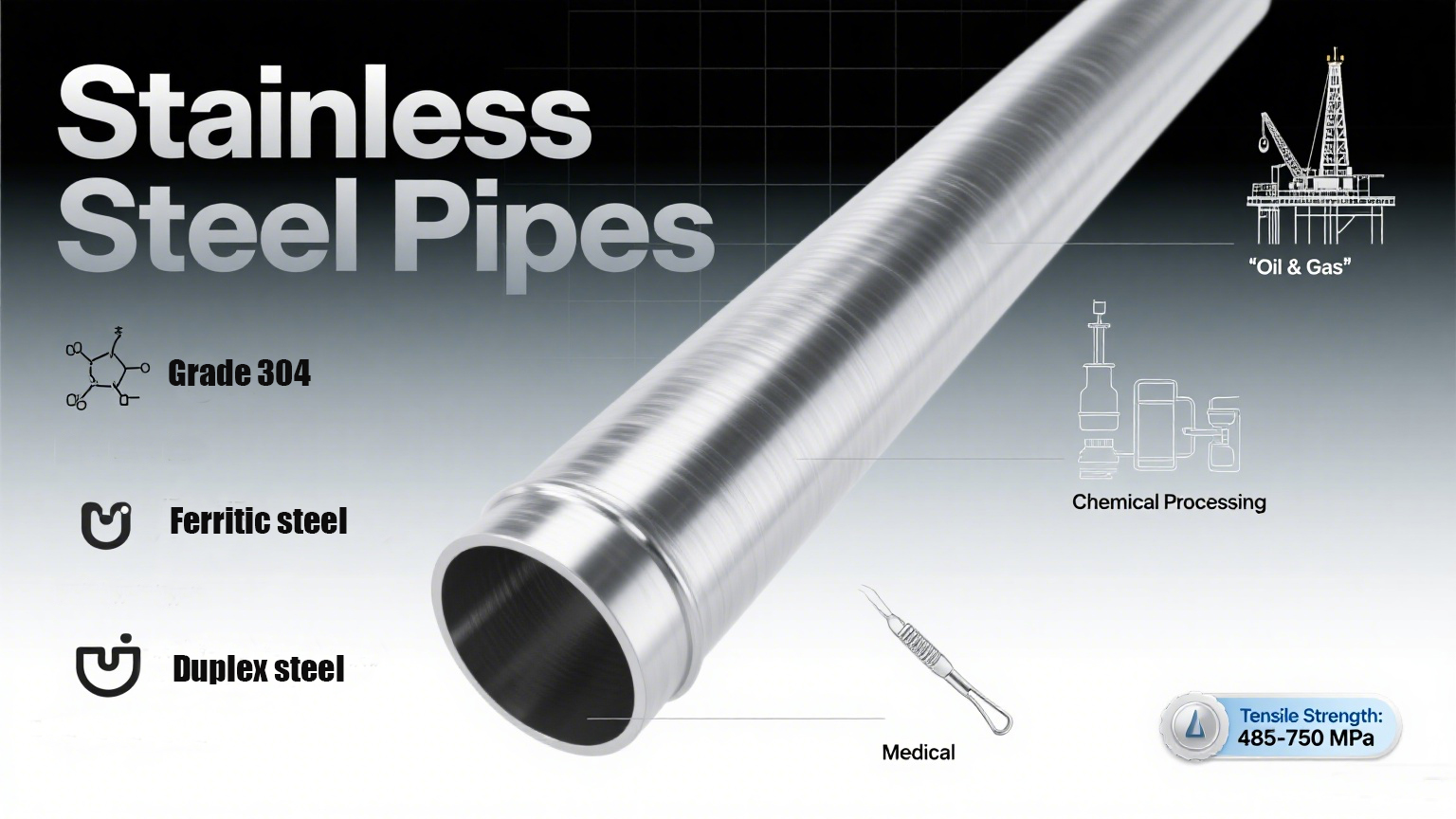
Stainless steel pipes have become an integral component in various industries, including construction, plumbing, petrochemical, and aerospace. Their reputation for strength, durability, and corrosion resistance makes them a preferred choice for demanding applications. This comprehensive guide aims to unveil the core aspects of stainless steel pipes, exploring their types, properties, manufacturing processes, applications, and maintenance considerations.
Introduction
Stainless steel pipes are hollow cylindrical tubes made from an alloy primarily composed of iron, with a minimum of 10.5% chromium content. The addition of other elements such as nickel, molybdenum, and manganese enhances their mechanical properties and corrosion resistance. Understanding the fundamental characteristics of stainless steel pipes is essential for selecting the right type for specific applications.
Types of Stainless Steel Pipes
Stainless steel pipes are classified based on their microstructure, which influences their mechanical properties and corrosion resistance. The main categories include:
| Type | Microstructure | Corrosion Resistance | Typical Uses |
|---|---|---|---|
| Austenitic | Face-centered cubic (FCC) | Excellent | Food processing, chemical industries, architecture |
| Ferritic | Body-centered cubic (BCC) | Good | Automotive exhausts, industrial applications |
| Martensitic | Body-centered tetragonal | Moderate to Good | Cutlery, surgical instruments, valves |
| Duplex | Mixed austenitic-ferritic | Superior | Oil and gas, chemical processing |
| Precipitation Hardening | Martensitic with precipitates | High | Aerospace, high-strength applications |
Austenitic Stainless Steel
Austenitic stainless steel is the most common type, known for its excellent corrosion resistance and ductility. Grades such as 304 and 316 are popular choices.
Ferritic Stainless Steel
Ferritic steels offer good corrosion resistance and are magnetic. They are generally less ductile but more cost-effective.
Martensitic Stainless Steel
These steels are hardenable through heat treatment, offering high strength but lower corrosion resistance.
Duplex Stainless Steel
Combining austenitic and ferritic microstructures, duplex steels provide a balance of strength and corrosion resistance, suitable for aggressive environments.
Properties of Stainless Steel Pipes
Understanding the properties of stainless steel pipes helps in assessing their suitability for different applications.
Mechanical Properties
| Property | Typical Values | Description |
|---|---|---|
| Tensile Strength | 485–750 MPa | Resistance to breaking under tension |
| Yield Strength | 170–370 MPa | Stress at which permanent deformation occurs |
| Ductility | 40–60% elongation | Ability to deform plastically before fracture |
| Hardness | Varies (HRB/HRC) | Resistance to surface indentation |
Corrosion Resistance
Stainless steel’s chromium content forms a passive oxide layer, providing corrosion resistance. The level varies across types, with austenitic grades offering the highest.
Thermal Properties
- Thermal Conductivity: 15–25 W/m·K depending on grade
- Expansion Coefficient: 16–17 x 10^-6 /°C
Physical Properties
- Density: Approximately 8 g/cm³
- Magnetism: Austenitic grades are generally non-magnetic, while ferritic and martensitic grades are magnetic.
Manufacturing Processes of Stainless Steel Pipes
The manufacturing process influences the pipe’s strength, surface finish, and corrosion resistance. Common methods include:
Seamless Pipe Manufacturing
Produced by extruding or rotary piercing to create a pipe without a seam, offering higher strength and better corrosion resistance.
Welded Pipe Manufacturing
Made by rolling plates or strips and welding the seam. Cost-effective for large diameters.
| Process | Description | Advantages | Disadvantages |
|---|---|---|---|
| Electric Resistance Welding (ERW) | Welding edges via electric resistance | Cost-effective, suitable for large quantities | Slightly lower corrosion resistance at seam |
| Longitudinal Submerged Arc Welding (LSAW) | Heavy-gauge pipes via submerged arc welding | High strength, suitable for high-pressure applications | More expensive |
| Spiral Welded | Spiral seam welding | Suitable for large diameter pipes | May have different strength characteristics |
Heat Treatment
Post-welding heat treatments, such as solution annealing, improve corrosion resistance and mechanical properties.
Strength and Durability Factors
The strength and durability of stainless steel pipes depend on various factors:
Microstructure and Alloy Composition
- Higher nickel content enhances ductility and toughness.
- Molybdenum improves pitting corrosion resistance.
Manufacturing Quality
- Consistent wall thickness and weld quality prevent weak points.
- Proper surface finish reduces corrosion initiation sites.
Environmental Conditions
- Chloride-rich environments demand higher alloy grades like 316 or duplex stainless steels.
- Temperatures exceeding certain thresholds may affect material properties.
Maintenance and Care
Regular inspection, cleaning, and protective coatings prolong pipe lifespan.
Applications of Stainless Steel Pipes
Stainless steel pipes are versatile, finding applications across multiple sectors:
| Industry | Application | Specific Use Cases |
|---|---|---|
| Construction | Structural supports, handrails | Resistance to weathering and aesthetics |
| Oil & Gas | Drilling, transport of fluids | High-pressure, corrosive environments |
| Food & Beverage | Processing equipment, pipelines | Sanitary requirements |
| Chemical Processing | Reactors, piping | Resistance to aggressive chemicals |
| Medical | Surgical instruments, implants | Sterility and corrosion resistance |
| Aerospace | Hydraulic systems | High strength-to-weight ratio |
Benefits of Using Stainless Steel Pipes
- Corrosion Resistance: Extends lifespan in harsh environments.
- Strength & Durability: Can withstand high pressure and mechanical stress.
- Hygiene: Non-porous surface prevents bacterial growth.
- Aesthetic Appeal: Maintains appearance over time.
- Recyclability: Eco-friendly and sustainable.
Maintenance and Longevity
Proper maintenance ensures optimal performance:
| Maintenance Practice | Purpose | Recommendations |
|---|---|---|
| Regular Cleaning | Remove dirt, salts, and debris | Use mild detergents; avoid abrasive tools |
| Inspection | Detect corrosion or damage early | Visual checks, ultrasonic testing |
| Protective Coatings | Enhance corrosion resistance | Apply anti-corrosion paints or coatings |
| Environmental Control | Minimize exposure to corrosive agents | Use in controlled environments when possible |
Comparing Stainless Steel Grades: Strength and Corrosion Resistance
| Grade | Microstructure | Tensile Strength (MPa) | Corrosion Resistance | Typical Applications |
|---|---|---|---|---|
| 304 | Austenitic | 485–750 | Good | General-purpose, food industry |
| 316 | Austenitic | 485–750 | Excellent | Marine, chemical processing |
| 201 | Austenitic | 480–680 | Moderate | Cost-sensitive applications |
| 2205 (Duplex) | Duplex | 620–750 | Superior | Oil & gas, chemical plants |
| 17-4PH (Precipitation Hardening) | Martensitic | 930–1300 | Very good | Aerospace, high-strength needs |


Future Trends in Stainless Steel Pipe Technology
Advancements are ongoing to enhance the properties and applications of stainless steel pipes:
- Nano-coatings: Impart additional corrosion resistance and self-cleaning capabilities.
- Additive Manufacturing: 3D printing of custom pipe components.
- High-Performance Alloys: Development of alloys capable of withstanding extreme environments.
- Smart Monitoring: Integration of sensors for real-time health monitoring.
Conclusion
Stainless steel pipes are a testament to the blend of strength, resilience, and versatility. Their microstructural diversity allows for tailored properties suited to specific needs. Whether in demanding industrial environments or aesthetic architectural elements, understanding their properties and manufacturing intricacies enables better selection and maintenance, ultimately ensuring long-term performance and safety.
As industries continue to evolve, stainless steel pipes will undoubtedly adapt, incorporating innovative materials and technologies to meet the growing demands for durability, sustainability, and efficiency.
References
- [ASM International. “Stainless Steels: An Overview.” ASM Handbook, 2004.]
- [International Stainless Steel Forum. “Stainless Steel in Industry.” ISF Reports, 2023.]
- [ASTM A312 / A312M – Standard Specification for Seamless, Welded, and Heavily Cold Worked austenitic Stainless Steel Pipes.]
- [DIN EN 10255:2013 – Steel tubes for mechanical engineering, structural purposes, and water conduction.]

Get Your Next Project Done!
China Steel Supplier & Manufacturer
THE LARGEST METALS MANUFACTURING
GengFei Steel is a professional “Steel Supplier” located in China, we provide supply service of stainless steel, carbon steel, aluminum and other metal materials.
As an industry-leading company, we are committed to providing our customers with the highest quality raw materials backed by first-class customer service and support. Our wide range of supply includes all kinds of stainless steel plate, tube, wire rod and carbon steel plate, tube, bar and so on. Our team of experienced professionals can help you choose the material that best suits your project needs and ensure your order is delivered on time. Our clients range from small businesses to large manufacturers, and we can provide professional service and support no matter the size of your needs.