If you source steel for fabrication, export, or machining, 1018 and A36 are two of the most commonly compared low-carbon steels. They are similar enough that buyers often ask whether they are interchangeable, but in practice they are used for different priorities.
The first thing to understand is this: ASTM A36 is a structural steel specification, while 1018 is an SAE/AISI carbon steel grade designation. A36 is defined around structural use and minimum mechanical requirements, while 1018 is usually chosen for its more controlled chemistry, better machining behavior, and cleaner finish in common cold-finished supply.
Quick Answer
For most buyers, the rule of thumb is simple:
Choose 1018 when you need machined parts, tighter consistency, better surface finish, and higher typical strength in cold-drawn condition.
Choose A36 when you need economical structural steel for plates, bars, beams, channels, angles, and welded fabrications.
What Is 1018 Steel?
1018 is a low-carbon steel grade typically described with carbon around 0.15–0.20% and manganese around 0.60–0.90%. Common published data for cold-drawn 1018 shows about 440 MPa / 63.8 ksi tensile strength, 370 MPa / 53.7 ksi yield strength, 15% elongation, and machinability around 78% of B1112. It is widely described as easy to machine and weld, and commonly used for pins, shafts, studs, spacers, fixtures, and other machined components.
ASTM A36 is a carbon structural steel specification for shapes, plates, and bars of structural quality used in bolted, riveted, or welded construction and for general structural purposes. ASTM’s summary states that A36 is evaluated by heat analysis and tension testing for required chemistry and tensile properties. Common summaries list minimum yield strength around 36 ksi / 250 MPa and ultimate tensile strength around 58–80 ksi / 400–550 MPa. A36 is most commonly associated with hot-rolled structural steel.
The Biggest Mistake in This Comparison
A lot of online comparisons quietly compare cold-drawn 1018 against hot-rolled A36. That can be useful commercially, because that is often how the materials are actually bought, but it is not a perfect apples-to-apples comparison. Cold drawing improves finish and can raise strength, while hot-rolled A36 is optimized for economical structural supply. That is one major reason 1018 often looks better on machinability and yield strength, while A36 looks better on structural availability and price.
Strength: Which Is Stronger?
In common published condition data, cold-drawn 1018 usually has higher typical yield strength than A36. Published 1018 values are about 53.7 ksi yield and 63.8 ksi tensile, while A36 is commonly summarized at 36 ksi minimum yield and 58–80 ksi tensile. That means 1018 often resists permanent deformation better in smaller machined components, while A36 remains strong enough for many load-bearing structural applications at lower cost.
This is also why many recent comparison pages say A36 bends sooner, while 1018 holds shape better in machined or precision parts.
Machinability and Surface Finish
This is where 1018 usually wins clearly. The 1018 datasheet rates machinability at 78% of B1112, and major comparison pages consistently position 1018 as the better choice for extensive machining, better finish, and more precise components. A36 can still be machined, but published A36 summaries put machinability around 72%, and multiple sources note it machines less easily than 1018.
In practical terms:
1018 is usually preferred for shafts, pins, bushings, studs, spacers, fixtures, and turned parts.
A36 is usually preferred where machining is secondary and the steel is mainly being cut, welded, drilled, and assembled.
Weldability and Formability
Both steels are generally considered easy to weld because they are low-carbon steels. The 1018 datasheet says it can be welded by conventional welding processes, with preheating generally unnecessary except for thicker sections. A36 is also widely described as easy to weld by common welding methods and is heavily used in welded structures.
For forming, the nuance is important: A36’s lower yield strength means it often bends more readily, while 1018’s higher strength and cold-finished nature often make it better when the part must hold a more precise shape after machining.
Chemistry: Why 1018 Feels “More Controlled”
1018 is usually discussed as a more chemistry-defined steel grade, with a narrow carbon range of 0.15–0.20% and manganese 0.60–0.90%. A36, by contrast, is a structural ASTM specification where chemistry is controlled alongside the structural requirements, and common market summaries list typical values such as carbon up to about 0.25%, manganese around 0.80–1.20%, phosphorus 0.04% max, sulfur 0.05% max, and silicon 0.40% max.
That is one reason many machinists and buyers think of 1018 as the “cleaner” choice for precision work, while A36 is the “structural economy” choice.
Cost and Availability
A36 is usually the lower-cost option in real projects. Recent market comparison pages say A36 is generally cheaper because it is produced at larger structural scale and commonly supplied as hot-rolled plate, bar, and structural shapes. 1018 is often more expensive because it is more commonly purchased in cold-finished bar forms and used for more specialized parts.
Availability also differs:
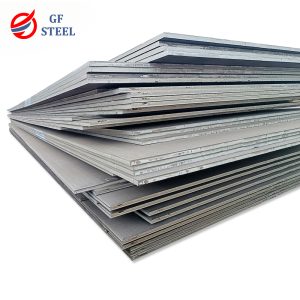
A36 is easy to find in plate, flat bar, angle, channel, beam, and structural sections.
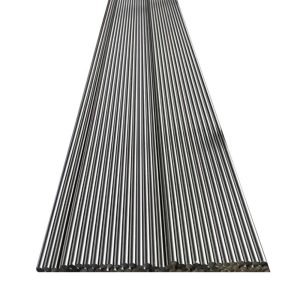
1018 is more commonly stocked in round bar, square bar, rectangular bar, and shafting-type forms for machining.
Best Uses for Each
Choose 1018 when you need:
machined components
better dimensional consistency
better surface finish
pins, dowels, shafts, spacers, fastener-type parts
parts that may be carburized or case hardened for surface wear applications
Choose A36 when you need:
structural fabrication
welded frames
base plates
brackets, supports, beams, channels, angles
economical large-scale steel supply for buildings, bridges, platforms, and general fabrication
Usually, no—not by default. They may overlap in some low-carbon steel applications, but they are not the same designation system and should not be swapped casually on drawings or purchase orders. If the job is structural and specified as ASTM A36, the structural spec matters. If the job is a machined part designed around 1018 bar, the tighter chemistry and common cold-finished condition often matter more than the nominal low-carbon label.
The safest wording for sales and procurement is: “1018 and A36
FAQ
Is 1018 stronger than A36?
In commonly published cold-drawn 1018 data, yes—especially in yield strength. Typical 1018 values are around 53.7 ksi yield, while A36 is commonly specified at 36 ksi minimum yield.
Is A36 easier to bend than 1018?
Generally yes. Multiple sources note A36’s lower yield strength means it starts to plastically deform sooner than cold-rolled or cold-drawn 1018.
Which is better for machining?
1018 is usually better for machining and surface finish. Its published machinability is higher than A36, and comparison pages consistently recommend it for precision parts.
Which is better for structural steel work?
A36. It is specifically an ASTM structural steel specification and is commonly used for beams, plates, channels, angles, and general welded structures.
Which is cheaper?
A36 is usually cheaper in real-world supply because it is produced and sold in higher-volume structural forms and is commonly hot rolled.
GengFei Steel is a professional “Steel Supplier” located in China, we provide supply service of stainless steel, carbon steel, aluminum and other metal materials.
As an industry-leading company, we are committed to providing our customers with the highest quality raw materials backed by first-class customer service and support. Our wide range of supply includes all kinds of stainless steel plate, tube, wire rod and carbon steel plate, tube, bar and so on. Our team of experienced professionals can help you choose the material that best suits your project needs and ensure your order is delivered on time. Our clients range from small businesses to large manufacturers, and we can provide professional service and support no matter the size of your needs.