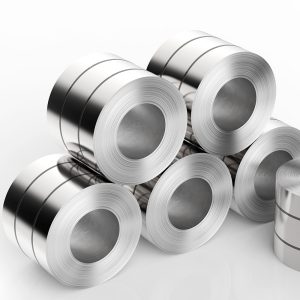
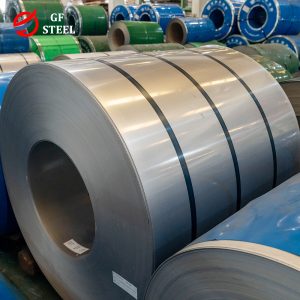
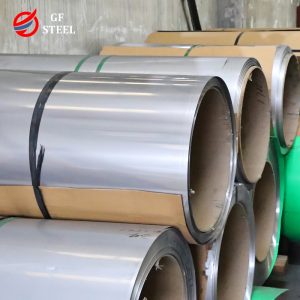
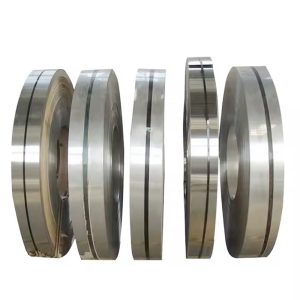
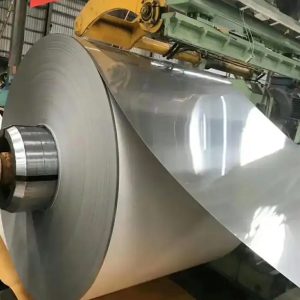
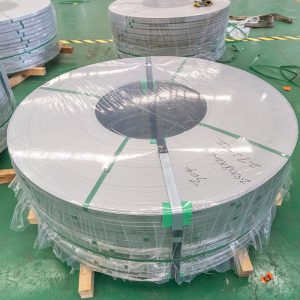
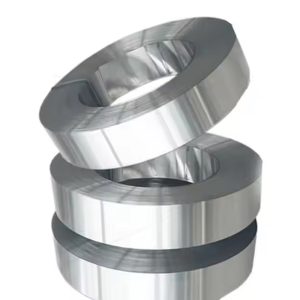
304 Stainless Steel Coil 1.4301
304 stainless steel (UNS S30400) is the most widely used austenitic stainless steel alloy. Known for its exceptional corrosion resistance, formability, and weldability, it contains 18% chromium and 8% nickel, earning it the nickname “18/8 stainless steel.” GengFei Steel specializes in supplying 304 stainless steel in diverse forms, tailored to meet industrial demands.
Our Supply Forms & Dimensions of 304 stainless steel:
| Form | Dimensions | Standards |
| Sheets/Plates  | Thickness: 0.1mm–100mm; Width: 1000–2000mm  | ASTM A240, AISI 304 |
| Coils  | Thickness: 0.3–6mm; Width: 10–1500mm  | EN 1.4301, JIS SUS304 |
| Bars/Rods  | Diameter: 5mm–500mm; Length: 1–6m  | ASTM A276, ASTM A479 |
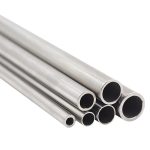
| Tubes/Pipes  | OD: 6–1200mm; Wall Thickness: 0.5–50mm  | ASTM A312, ASTM A269 |
| Wire  | Diameter: 0.1–10mm  | ASTM A580, DIN 17440 |
Custom sizes and tolerances available upon request.
Industrial & Commercial Uses
- Food Processing: Its hygienic surface and resistance to organic acids make it ideal for tanks, piping, and equipment.
- Architecture: Used in cladding, handrails, and structural components for its aesthetic appeal and durability.
- Medical Devices: Their non-reactive nature makes them suitable for surgical instruments and implants.
- Chemical Industry: Resists corrosion from acidic and alkaline environments.
- Automotive: Exhaust systems, grilles, and trim components.
Why Choose GengFei Steel as Your 304 Stainless Steel Supplier?
- ISO 9001-certified manufacturing.
- Customized dimensions and finishes.
- Global logistics support.
Chemical Composition of 304 Stainless Steel
| Element | Content (%) | Role |
| Chromium (Cr) | 18.0–20.0 | Enhances oxidation resistance. |
| Nickel (Ni) | 8.0–10.5 | Stabilizes austenitic structure. |
| Carbon (C) | ≤0.08 | Reduces carbide precipitation. |
| Manganese (Mn) | ≤2.0 | Improves strength and workability. |
| Silicon (Si) | ≤1.0 | Deoxidizer during melting. |
| Phosphorus (P) | ≤0.045 | Controls brittleness. |
| Sulfur (S) | ≤0.03 | Enhances machinability. |
| Iron (Fe) | Balance | Base metal. |
Complies with ASTM A240, AISI 304, and EN 1.4301 standards.
Mechanical Properties of 304 Stainless Steel
| Property | Value |
| Tensile Strength | 515–720 MPa |
| Yield Strength (0.2% offset) | 205 MPa (min) |
| Elongation (50mm gauge) | 40% (min) |
| Hardness (Brinell) | 201 HB (max) |
| Modulus of Elasticity | 193 GPa |
Note: Properties vary with heat treatment (e.g., annealing at 1010–1120°C).
Physical Properties of 304 Stainless Steel
| Property | Value |
| Density | 8,000 kg/m³ |
| Melting Point | 1400–1450°C |
| Thermal Conductivity | 16.2 W/m·K (at 100°C) |
| Electrical Resistivity | 0.72 μΩ·m |
| Magnetic Permeability | <1.02 (Annealed, non-magnetic) |
Application
Agricultural Modernization
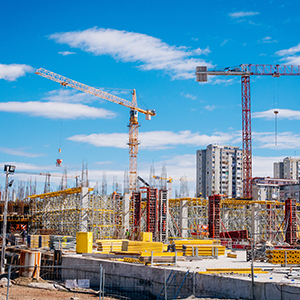
Construction Engineering
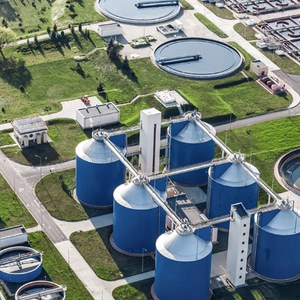
Environmental Protection Engineering
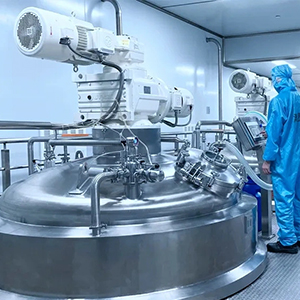
Food Processing Industry
Intelligent Home Appliances
Medical and Health Field
New Energy Infrastructure