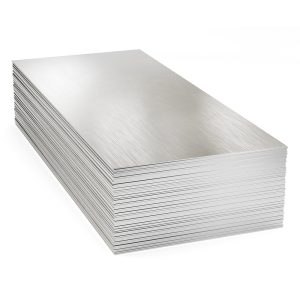
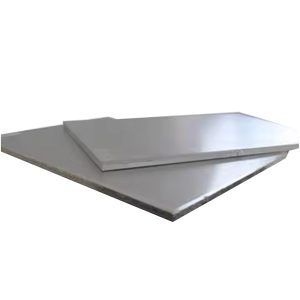
An Aluminium Plate is a flat, thick aluminium product typically over 6.35 mm (0.25 inches) in thickness, manufactured through hot or cold rolling processes. Unlike thinner aluminium sheets or foils, plates are engineered for heavy-duty applications requiring superior strength, durability, and load-bearing capacity. They are widely used in industries like aerospace, marine, and construction due to their lightweight nature, corrosion resistance, and excellent machinability.
Technical Parameters of Aluminium Plate
Aluminium plates are defined by their alloy composition, dimensions, and mechanical properties.
| Thickness Range |
6.35 mm (0.25″) to 200 mm (7.87″) or custom |
| Common Alloys |
5083, 6061, 6082, 7075 (ideal for structural, marine, or aerospace uses) |
| Standard Sizes |
Widths: 1000–2500 mm |
Lengths: 2000–12000 mm (customizable) |
| Temper Treatments |
T6 (heat-treated), H32/H34 (strain-hardened), O (annealed) |
| Surface Finish |
Mill finish, anodized, brushed, or coated (e.g., anti-slip, powder-coated) |
| Density |
~2.7 g/cm³ |
| Standards |
ASTM B209, EN 485, AMS 4027, DIN 1745 |
Chemical Composition of Aluminum Sheet (Common Alloys)
Aluminum sheets are made from various alloys, each with unique elemental compositions to suit specific applications. Below are typical compositions for popular alloys (values in weight %):
| Alloy |
Al (%) |
Si (%) |
Fe (%) |
Cu (%) |
Mn (%) |
Mg (%) |
Cr (%) |
Zn (%) |
Others |
| 1050 |
99.5+ |
≤0.25 |
≤0.40 |
≤0.05 |
≤0.05 |
≤0.05 |
– |
≤0.05 |
Ti ≤0.03 |
| 3003 |
Balance |
≤0.6 |
≤0.7 |
≤0.05–0.20 |
1.0–1.5 |
– |
– |
≤0.10 |
– |
| 5052 |
Balance |
≤0.25 |
≤0.40 |
≤0.10 |
≤0.10 |
2.2–2.8 |
0.15–0.35 |
≤0.10 |
– |
| 6061 |
Balance |
0.4–0.8 |
≤0.7 |
0.15–0.40 |
≤0.15 |
0.8–1.2 |
0.04–0.35 |
≤0.25 |
Ti ≤0.15 |
Notes:
1050: Nearly pure aluminum, excellent conductivity and corrosion resistance.
3003: Manganese (Mn) improves strength and formability.
5052: Magnesium (Mg) enhances corrosion resistance (ideal for marine use).
6061: Magnesium + silicon (Mg/Si) for heat-treatable strength (structural applications).
Mechanical Properties of Aluminum Sheet
Mechanical properties vary by alloy and temper (e.g., H14, T6). Below are typical values for common alloys:
| Alloy |
Temper |
Tensile Strength (MPa) |
Yield Strength (MPa) |
Elongation (%) |
Hardness (Brinell) |
Density (g/cm³) |
| 1050 |
H14 |
100–130 |
85–110 |
5–10 |
23–32 |
2.71 |
| 3003 |
H14 |
150–200 |
140–185 |
8–15 |
40–55 |
2.73 |
| 5052 |
H32 |
230–280 |
195–245 |
10–15 |
60–75 |
2.68 |
| 6061 |
T6 |
310–330 |
275–300 |
12–17 |
95–100 |
2.70 |
Key Definitions:
Tensile Strength: Maximum stress before failure.
Yield Strength: Stress at which permanent deformation begins.
Elongation: Ductility (% stretch before breaking).
Temper: Processing method (e.g., H=strain-hardened, T=heat-treated).
Primary Applications of Aluminium Plate
Aircraft fuselage panels, wing structures, and landing gear components.
Satellite and spacecraft parts (alloy 7075 for high-strength needs).
Hulls, decks, and offshore platforms (5083 alloy for saltwater resistance).
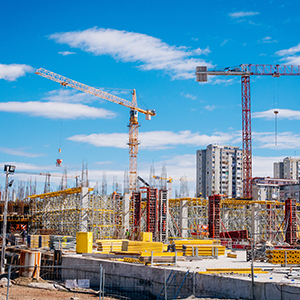
- Construction & Infrastructure:
Structural supports, bridges, and seismic reinforcement.
Architectural cladding and heavy-duty flooring.
Railcar bodies, armored vehicles, and truck trailers.
Press plates, molds, and hydraulic systems.
Heat exchangers and pressure vessels.
Military vehicle armor, ballistic protection.
Solar panel frameworks and nuclear reactor components.
Applications by Alloy
1050: Food packaging, reflectors, chemical tanks (non-structural).
3003: HVAC systems, gutters, fuel tanks (moderate strength).
5052: Marine components, vehicle panels, electronic chassis.
6061: Aerospace parts, structural frameworks, machinery.
Why Choose Aluminium Plate?
√ Lightweight: Reduces structural weight without compromising strength.
√ Sustainability: 100% recyclable with minimal energy input.
√ Versatility: Easily machined, welded, or formed into complex shapes.
√ Longevity: Resists rust, UV radiation, and extreme temperatures.