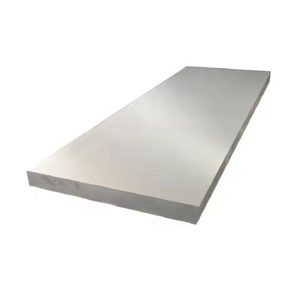
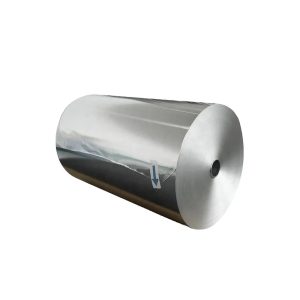
Commonly used products of AL-Mn series alloys include 3003 aluminum foil. This product has excellent anti-rust properties; its strength is about 10% higher than 1100, and its formability, weldability, and corrosion resistance are all good. The main statuses of its products include H18, H22, H24, and other statuses upon request. It is used to process parts that require good formability, high corrosion resistance, and good weldability. 3003 aluminum foil is mainly used in electronic components (electronic foil), honeycomb materials, building materials, sound insulation (viaducts, high-speed railwa,y road sound insulation, etc.), and as food packaging foil (3003 aluminum foil packaging bags, vacuum packaging bags, aluminum foil bags) and other industries.
Product Description
| Product |
3003 Aluminum Foil |
| Temper |
O, H22, H24, H14, H16, H18 |
| Width |
100–1600mm |
| Thickness |
0.016–0.2mm |
| Length(mm) |
Coil (C) |
| MOQ |
1 Ton |
Aluminium foil (or aluminum foil in American English; often informally called tin foil) is aluminium prepared in thin metal leaves. The foil is pliable and can be readily bent or wrapped around objects. Thin foils are fragile and are sometimes laminated with other materials such as plastics or paper to make them stronger and more useful.
Aluminum foil is one of the hottest aluminum material products in the national market. It takes aluminum alloy as a material. 3003 aluminum foil is a common aluminum alloy material in the aluminum foil series. And it’s also a common product of Al-Mn series alloys. Due to the aluminum alloy contents Mn content, the foil has excellent rust resistance, weldability, and corrosion resistance. So, it’s the first choice for electrolytic capacitor, lunch box container, and aluminum honeycomb core material.
3003 aluminum alloy is an Al-Mn alloy. The strength of the aluminum foil is slightly higher than that of commercial pure aluminum. We can’t strengthen its properties by heat treatment. And only cold working methods can improve its mechanical properties.
Such alloys have high plasticity in the annealed state. In addition, during cold work hardening, it has low plasticity, good corrosion resistance and good weld-ability.3 003 aluminum alloy is mainly used for parts with high requirements, plasticity and good weld-ability, such as fuel tanks, gasoline or lubricating oil conduits, various liquid containers and other small load parts made by deep drawing, etc.
Chemical Composition of 3003 Aluminum Foil :
| Grade |
Aluminum (Al) |
Manganese (Mn) |
Iron (Fe) |
Silicon (Si) |
Copper (Cu) |
Zinc (Zn) |
Other |
| 3003 |
96.8 – 99% |
1.0 – 1.5% |
0 – 0.7% |
0 – 0.6% |
0.05 – 0.20% |
0 – 0.1% |
0 – 0.15% |
Mechanical Properties of 3003 Aluminum Foil :
| Elongation (Annealed): 1 |
30 |
| Elongation (H12): |
10 |
| Elongation (H14): |
8 |
| Elongation (H16): |
5 |
| Elongation (H18): |
4 |
| Tensile Strength (Annealed): 2 |
16 x 1000 psi |
| Tensile Strength (H12): |
19 x 1000 psi |
| Tensile Strength (H14): |
22 x 1000 psi |
| Tensile Strength (H16): |
26 x 1000 psi |
| Tensile Strength (H18): |
29 x 1000 psi |
| Yield Strength (Annealed): 3 |
6 x 1000 psi |
| Yield Strength (H12): |
18 x 1000 psi |
| Yield Strength (H14): |
21 x 1000 psi |
| Yield Strength (H16): |
25 x 1000 psi |
| Yield Strength (H18): |
27 x 1000 psi |
1 % in 2 inches
2 x 1000 psi
3 0.2% offset
Advantages of 3003 aluminum foil:
- The elongation rate of 3003 alloy aluminum foil is controllable and can be set according to customer requirements.
- High tensile strength.
- After welding the tabs, it is firm and won’t easily fall off.
- The quality of 3003 aluminum foil is stable, with a long-term supply, no serious bubble sand phenomenon.