Stainless Steel Pipe: Grades, Types, Specifications & Applications

What is a Stainless Steel Pipe?

Stainless steel pipe is a hollow, cylindrical tube made from stainless steel—a corrosion-resistant alloy of iron, chromium, and sometimes nickel and other elements. These pipes are widely used across industries due to their durability, strength, corrosion resistance, and hygienic properties.

Stainless steel pipes come in various grades, diameters, wall thicknesses, and finishes, suitable for applications ranging from fluid transportation and structural frameworks to food processing and medical use.

Steel1stop supplies high-end Stainless Steel Pipe. One-Stop Steel Service/Solution

WhatsApp us

Common Grades of Stainless Steel Pipe

Grade Composition Features Typical Applications
304 18% Cr, 8% Ni Most common grade, corrosion-resistant, weldable Food & beverage, chemical, household piping
316 16% Cr, 10% Ni, 2% Mo Superior corrosion resistance (especially to chlorides) Marine, pharmaceutical, medical
321 18% Cr, 9% Ni, Ti stabilized High temperature and intergranular corrosion resistance Heat exchangers, boilers
310 25% Cr, 20% Ni High-temperature performance Furnace components
2205 (Duplex) Cr-Ni-Mo alloy High strength and stress corrosion cracking resistance Offshore platforms, pressure vessels

Steel One Stop Stainless Steel Pipe

Product Packaging 1

Product Packaging

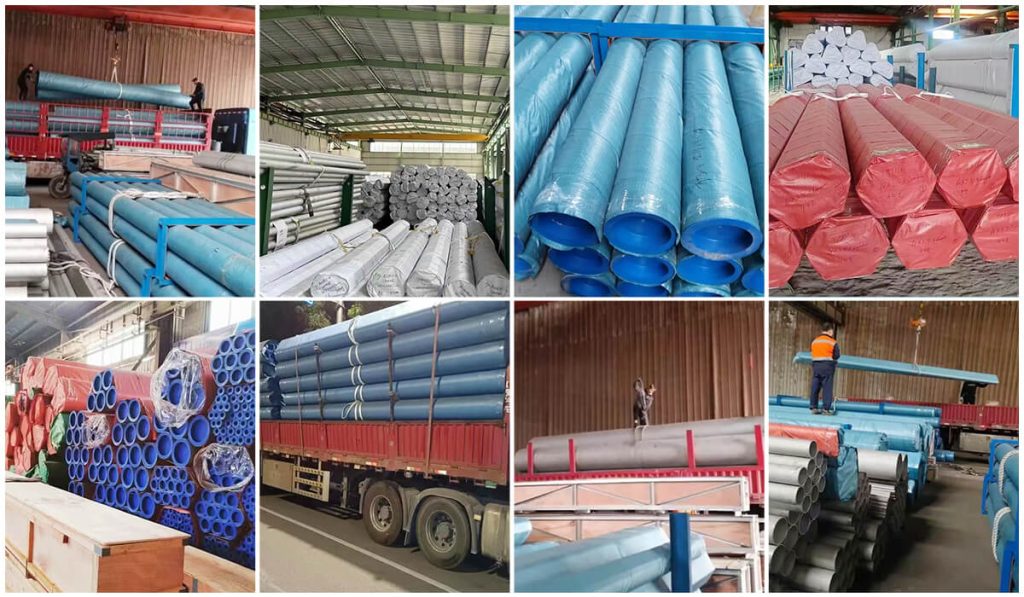
Adopting a professional industrial packaging solution that is moisture-proof and scratch resistant, each batch of steel is tied and fixed with customized wooden frames/steel strips, combined with anti rust coatings and cushioning pads to ensure zero damage during transportation. Clear product model, batch number, and storage identification on the outer packaging, supporting customized enterprise logos and information labels. Environmentally friendly and recyclable packaging materials practice green concepts, reducing transportation and disassembly costs.

Key Features of Stainless Steel Pipes

  • Corrosion Resistance: Resists oxidation and rust in most environments.

  • High Strength: Can withstand high pressure and temperature conditions.

  • Hygienic Surface: Smooth and clean surface, ideal for sanitary applications.

  • Low Maintenance: Requires minimal cleaning and offers long service life.

  • Aesthetic Appearance: Used in architectural designs for its attractive finish.

  • Recyclability: Stainless steel is 100% recyclable, making it environmentally friendly.

Types of Stainless Steel Pipes

Seamless Stainless Steel Pipe

Produced without welding

Excellent strength and pressure resistance

Ideal for high-temperature, high-pressure applications

Welded Stainless Steel Pipe

Formed by rolling and welding a stainless steel strip

Cost-effective and available in longer lengths

Suitable for low to medium-pressure systems

Sanitary Stainless Steel Pipe

Smooth inner surface (polished or electropolished)

Used in food, beverage, dairy, and pharmaceutical industries

Thick-Walled Stainless Steel Pipe

Designed for heavy-duty and high-pressure use

Used in industrial piping and machinery

Decorative Stainless Steel Pipe

Polished surface finish

Used in interior design, handrails, and furniture

Manufacturing Standards

StandardDescription
ASTM A312Seamless and welded austenitic stainless steel pipes
ASTM A213Boiler, superheater, and heat-exchanger tubes
ASTM A269General service tubing with high corrosion resistance
EN 10216 / EN 10217European standards for seamless and welded pipes
JIS G3459 / G3463Japanese industrial stainless steel piping standards
DIN 17458 / 17457German DIN standards for seamless and welded tubes

Applications of Stainless Steel Pipe

Stainless steel pipes are essential in numerous sectors due to their versatility and resilience.

Industrial Applications

Industrial Applications

Oil & Gas: Transmission of crude oil, natural gas, and refined products

Chemical Processing: Resistance to acidic and corrosive fluids

Power Generation: Heat exchangers, condensers, and boiler tubes

Marine: Saltwater piping, ballast systems, exhausts

Construction: Structural support, building cladding, infrastructure

Sanitary Applications

Sanitary Applications

Food & Beverage: Milk lines, brewery piping, CIP systems

Pharmaceutical: Clean piping systems for sterile processes

Water Treatment: Purified and waste water pipelines

Decorative Commercial Uses

Decorative & Commercial Uses

Architecture: Handrails, railings, curtain walls

Furniture: Chairs, tables, frames

Automotive: Exhaust systems, trim parts

Stainless Steel Pipe vs. Other Materials

Property Stainless Steel Carbon Steel PVC Copper
Corrosion Resistance Excellent Poor Moderate Good
Temperature Resistance High High Low Medium
Strength High Very High Low Medium
Lifespan 50+ years 20–30 years 10–20 years 30+ years
Cost Higher Lower Low High

Surface Treatments & Coatings

To improve performance or enhance aesthetics, stainless steel pipes can undergo various surface treatments:

  • Polishing: Improves appearance and reduces biofilm accumulation

  • Pickling & Passivation: Removes scale and restores corrosion resistance

  • Coating (Optional): For extreme environments where additional protection is needed

Surface Treatments

Welding & Fabrication of Stainless Steel Pipe

Stainless steel pipes are highly weldable, especially grades like 304 and 316. Common methods include:

  • TIG (GTAW): Produces clean, strong welds

  • MIG (GMAW): Fast and cost-effective

  • Orbital Welding: Automated, high-precision welding for sanitary tubing

  • Laser Welding: Ultra-precise with minimal distortion

How to Select the Right Stainless Steel Pipe?

  • Determine the Application – Is it structural, sanitary, or high-pressure?

  • Choose the Right Grade – 304 for general use, 316 for corrosive environments

  • Decide on Seamless or Welded – Seamless for high pressure, welded for cost efficiency

  • Select Schedule & Thickness – Based on flow rate and pressure

  • Specify Length & Finish – For installation convenience and aesthetic appeal

  • Check Certifications – Ensure compliance with ASTM, ISO, or client-specific standards

FAQ – Frequently Asked Questions

Q1: What is the difference between 304 and 316 stainless steel pipes?

304 is the most commonly used grade and suitable for general environments. 316 contains molybdenum, offering superior resistance to corrosion, especially in marine or chemical environments.

Q2: Are stainless steel pipes suitable for high-pressure systems?

Yes, particularly seamless stainless steel pipes in higher schedules (SCH 80S, SCH 160) are ideal for high-pressure and high-temperature systems.

Q3: Can stainless steel pipes rust?

While highly resistant to rust, improper storage, welding defects, or exposure to certain chemicals (like chlorides) can cause corrosion. Regular cleaning and passivation can mitigate this.

Q4: Is it possible to bend or fabricate stainless steel pipe?

Yes, stainless steel pipes can be bent using mandrel bending machines or fabricated using cutting, welding, or forming processes. Proper tools and techniques are essential to prevent surface damage or work hardening.

Q5: What’s the difference between stainless steel pipe and tube?

Though often used interchangeably, pipe is specified by internal diameter (ID) and wall thickness for flow applications, whereas tube is specified by outside diameter (OD) and is typically used in structural or precision applications.

Why Global Clients Choose Us?

Henan Gengfei Industrial Co., Ltd. is China’s leading supplier of steel and other metal products. Our company is dedicated to providing its customers with the quick quotes, superior quality products, competitive prices and fastest possible deliveries.

Direct Mill Partnerships

Long-term collaborations with leading steel mills secure preferential pricing on steel, ensuring up to 15% cost savings versus competitors.

Certified Quality

Strict adherence to ASTM, EN, and JIS standards, backed by mill test reports (MTRs) for every batch.

Dynamic Pricing

Real-time adjustments to market fluctuations (e.g., iron ore prices) guarantee fair quotes.

Dedicated Account Managers

24/7 technical and logistical assistance via email, WhatsApp, or WeChat.

Bulk Orders

5–10% discounts for 50+ ton purchases. Annual rebates up to 3% for repeat clients.

Dedicated Account Managers

Custom cutting, slitting, and coating services to match project-specific needs (e.g., ±0.1mm thickness tolerance).

Request an Appointment

Looking for a reliable supplier of aluminum bars in various shapes and alloys? Contact us for technical consultation, pricing, and delivery options. We provide OEM, bulk orders, and international shipping.

    Success! Your message has been sent to us.
    Error! There was an error sending your message.
    has been added to your cart.
    Checkout