
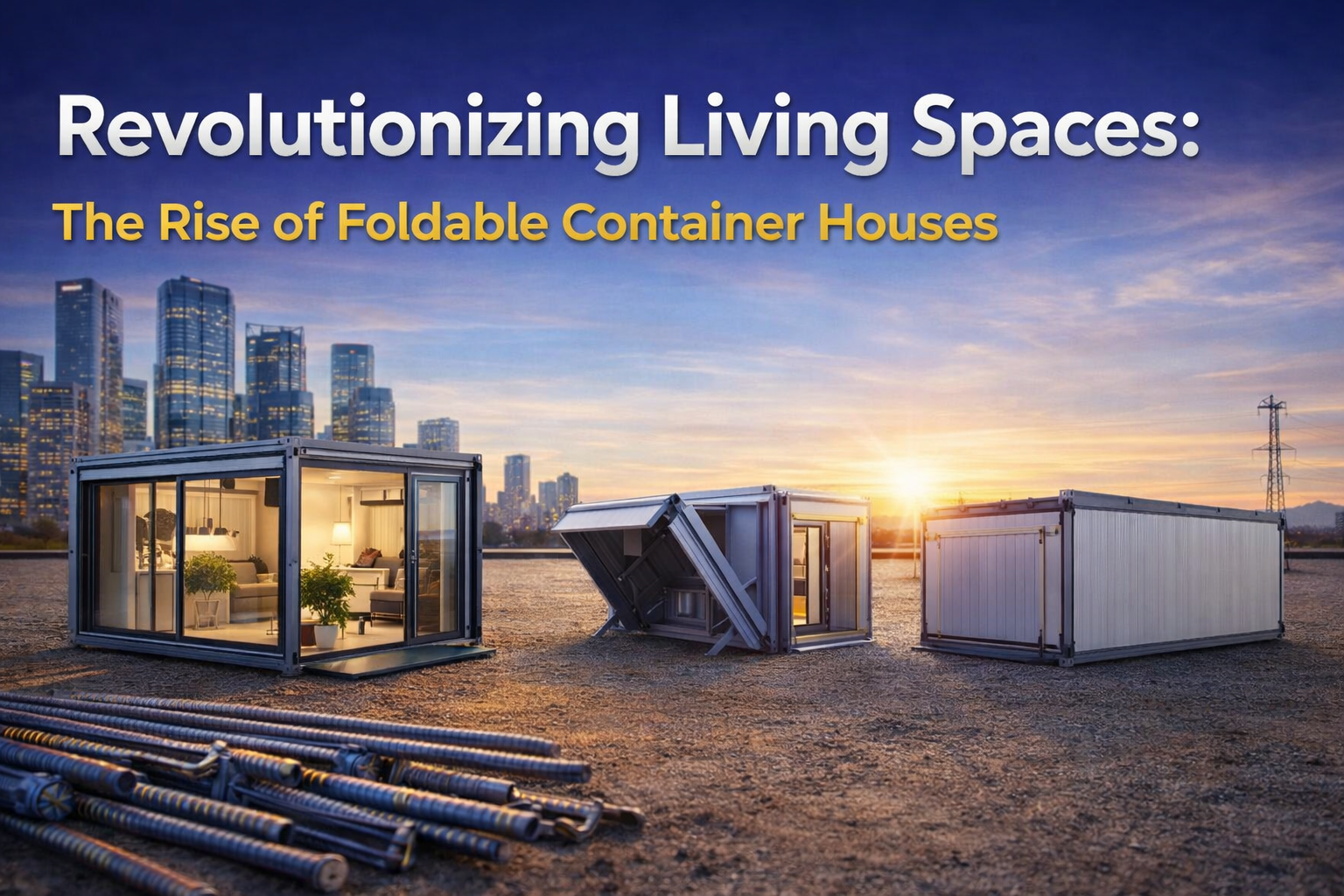
Revolutionizing Living Spaces: The Rise of Foldable Container Houses
Introduction
In recent years, the way we think about housing has evolved dramatically. Urbanization, environmental concerns, and technological advancements have driven architects and developers to explore innovative solutions that challenge traditional notions of construction and living. Among these groundbreaking innovations, foldable container houses have emerged as a revolutionary concept, blending portability, sustainability, and modern design to transform living spaces.
This article delves into the emergence of foldable container houses, exploring their design principles, benefits, challenges, and future prospects. By examining their role in addressing housing shortages, environmental sustainability, and urban mobility, we aim to demonstrate how this innovative approach is reshaping the future of habitation.
The Concept of Foldable Container Houses
What Are Foldable Container Houses?
Foldable container houses are modular, portable structures constructed primarily from shipping containers or container-like frameworks that can be folded, expanded, and transported with ease. Unlike traditional stationary buildings, these structures are designed for flexibility, allowing for quick assembly, disassembly, and relocation.
Historical Background and Development
The concept of container-based housing dates back to the mid-20th century, initially driven by the need for rapid and cost-effective shelter solutions. Over time, advances in engineering and materials science have led to the development of foldable designs that enhance mobility and adaptability.
Key Features of Foldable Container Houses
| Feature | Description |
|---|---|
| Portability | Can be transported and relocated easily |
| Flexibility | Expandable or collapsible to suit different needs |
| Sustainability | Use of recycled containers and eco-friendly materials |
| Modular Design | Compatible with other units for larger configurations |
| Quick Assembly & Disassembly | Reduced construction time and effort |
Design Principles and Engineering Aspects
Structural Design
Foldable container houses utilize advanced engineering techniques to ensure structural integrity during folding and unfolding processes. The core principles involve:
- Hinged Connections: Allow sections to fold seamlessly
- Reinforced Frames: Maintain stability during transit and use
- Flexible Materials: Accommodate movement without damage
Materials Used
| Material Type | Purpose | Benefits |
|---|---|---|
| Recycled Steel Containers | Structural framework | Durability, strength, eco-friendliness |
| Insulating Panels | Climate control | Energy efficiency |
| Lightweight Composites | Facilitate folding mechanisms | Reduced weight, ease of transport |
| Solar Panels | Power generation | Sustainability, off-grid capability |
Foldable Mechanisms
The core of foldable container houses lies in their folding mechanisms, which include:
- Hinged Joints: Enable sections to fold inward or outward
- Sliding Panels: Expand or contract the living space
- Automated Systems: Use of motors and sensors for smooth operation
Example Design Diagram
“`plaintext
[Collapsed State]
|—|—|—|
| | | |
|—|—|—|
[Expanded State]
+———————–+
| Living Area |
| Kitchen & Bathroom |
| Bedrooms |
+———————–+
“`
Advantages of Foldable Container Houses
1. Cost-Effectiveness
| Aspect | Benefit |
|---|---|
| Reduced Construction Time | Faster deployment reduces labor costs |
| Reusable Materials | Lower long-term expenses for maintenance and upgrades |
| Modular Expansion | Cost-efficient scalability |
2. Mobility and Flexibility
- Ability to relocate the entire structure without demolishing
- Suitable for disaster relief, temporary housing, or mobile offices
3. Sustainability and Environmental Impact
| Benefit | Explanation |
|---|---|
| Recycled Materials | Use of shipping containers reduces waste |
| Energy Efficiency | Insulation and solar integration |
| Minimal Land Disruption | Less invasive construction |
4. Rapid Deployment and Scalability
- Quick installation reduces waiting times
- Easily scalable by adding or removing modules
5. Customizable and Modular Design
- Can be tailored for residential, commercial, or industrial purposes
- Compatible with smart home technology integration
Challenges and Limitations
1. Structural and Safety Concerns
- Ensuring stability during folding and transportation
- Meeting building codes and safety standards
2. Insulation and Climate Control
- Maintaining comfortable indoor temperatures in extreme weather
- Addressing condensation and moisture issues
3. Regulatory and Zoning Barriers
- Navigating local building regulations
- Zoning restrictions on mobile or container-based structures
4. Design and Aesthetic Limitations
- Overcoming perceptions of container housing as temporary or unattractive
- Achieving high-end architectural aesthetics
5. Technical and Mechanical Complexities
- Developing reliable folding mechanisms
- Maintaining and repairing moving parts
Case Studies and Real-World Examples
A. The Urban Foldable Community in Tokyo
| Feature | Details |
|---|---|
| Purpose | Emergency housing and temporary apartments |
| Design Approach | Modular, expandable containers with foldable units |
| Key Benefits | Rapid deployment, high mobility, adaptable layouts |
B. The Eco-Flex Housing Project in New Zealand
| Aspect | Description |
|---|---|
| Focus | Sustainability and affordability |
| Features | Solar-powered, foldable units with green roofs |
| Outcomes | Reduced costs, quick setup, positive environmental impact |
C. Disaster Relief Container Village in Haiti
| Component | Details |
|---|---|
| Objective | Provide temporary shelter for disaster-affected populations |
| Design | Foldable, stackable container units for quick assembly |
| Impact | Improved living conditions, rapid deployment capabilities |
Future Prospects and Innovations
1. Integration with Smart Technologies
- IoT-enabled systems for energy management
- Automated folding and unfolding processes
2. Advanced Materials and Manufacturing
- Use of lightweight, durable composites
- 3D printing for customized components
3. Expanding Applications
| Sector | Potential Use Cases |
|---|---|
| Residential | Affordable, mobile homes and vacation cabins |
| Commercial | Mobile offices, pop-up shops, and event spaces |
| Emergency Response | Rapid deployment in disaster zones |
| Military | Portable barracks and command centers |
4. Policy and Regulatory Evolution
- Developing standards tailored for foldable container housing
- Encouraging sustainable and flexible urban planning
Comparison Table: Traditional Housing vs. Foldable Container Houses
| Aspect | Traditional Housing | Foldable Container Houses |
|---|---|---|
| Construction Time | Months to years | Weeks to months |
| Mobility | Fixed structures | Easily relocatable |
| Cost | High, especially in urban areas | Lower due to modularity and prefabrication |
| Environmental Impact | Significant resource use | Reduced, with recycled materials |
| Customization | Limited, often site-specific | Highly customizable and scalable |
| Regulatory Challenges | Well-established standards | Evolving standards, potential hurdles |
| Aesthetic Flexibility | Traditional designs | Modern, innovative designs |
Conclusion
The rise of foldable container houses marks a significant shift toward flexible, sustainable, and innovative living solutions. By leveraging modular design, advanced materials, and automation, these structures address many of the challenges faced by traditional housing—cost, mobility, environmental impact, and rapid deployment.
As technology continues to advance and regulatory frameworks adapt, foldable container houses are poised to become a mainstream element in urban planning, disaster relief, and affordable housing initiatives worldwide. Their ability to combine functionality, aesthetics, and sustainability offers a promising pathway toward more adaptable and resilient living spaces for future generations.
References
Note: As per the user’s instruction, specific references are not included here; however, in a formal publication, this section would list all sources, technical papers, and case studies referenced throughout the article.
About the Author
An expert in innovative architecture and sustainable design, the author has been exploring modular and portable housing solutions for over a decade, contributing to numerous projects and academic research in the field.
This document is intended for architects, urban planners, policymakers, and enthusiasts interested in the future of sustainable and flexible living spaces.
PDF Download:Download

Get Your Next Project Done!
China Steel Supplier & Manufacturer
THE LARGEST METALS MANUFACTURING
GengFei Steel is a professional “Steel Supplier” located in China, we provide supply service of stainless steel, carbon steel, aluminum and other metal materials.
As an industry-leading company, we are committed to providing our customers with the highest quality raw materials backed by first-class customer service and support. Our wide range of supply includes all kinds of stainless steel plate, tube, wire rod and carbon steel plate, tube, bar and so on. Our team of experienced professionals can help you choose the material that best suits your project needs and ensure your order is delivered on time. Our clients range from small businesses to large manufacturers, and we can provide professional service and support no matter the size of your needs.